




A Devotee First. A Guide for Many.
Ask Guruji who he is, and he will not begin with titles. He will tell you he is a devotee of Hanuman ji — not a sanyasi, but a kathavachak, one who tells the stories of the divine so ordinary people can carry them home.
Born in Gadha village, Chhatarpur, he grew up in a family of modest means and deep faith. His grandfather, Sant Shri Bhagwandas Garg Ji Maharaj, was the keeper of the Dham before him. From a young age he sat beside his elders at spiritual gatherings, learning the Ramcharitmanas long before the country knew his name.
Today, as Peethadhishwar, he leads daily Darshan, the Divya Darbar, Hanuman Kathas across the world, and a growing body of Seva — yet the heart of his work has never changed: to help people feel close to the divine, and to live with faith, service and dignity.
Guruji, in Brief
From a Village Courtyard to the Hearts of Millions
Guruji’s story does not begin with fame. It begins in a one-room home in a village most of the country had never heard of. From those quiet beginnings, the journey unfolded one Katha at a time.
Guruji is born in Gadha village, Chhatarpur, into a family of priests and modest means. His childhood is shaped by faith far more than by comfort.
From around the age of nine he spends his hours in worship at the village Hanuman temple, absorbing the scriptures beside his father and grandfather.
As a young teenager, encouraged by his grandfather, Guruji narrates his first Shrimad Bhagwat Katha near Chhatarpur — the first step of a path he would never leave.
After the passing of his grandfather, Guruji takes up the leadership of Bageshwar Dham — a tradition three generations deep in his family.
Through Kathas across Madhya Pradesh and neighbouring states — and through television and social media — his discourses reach devotees far beyond Gadha.
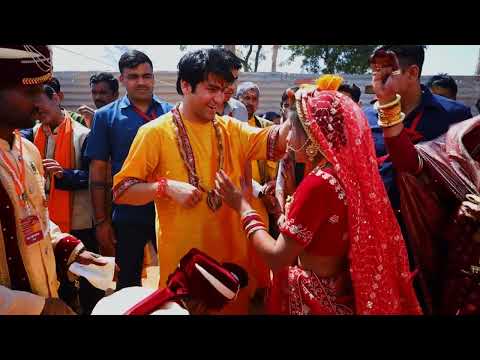
What begins as feeding pilgrims grows into the Annapurna Rasoi, mass weddings for underprivileged daughters, and community welfare — devotion expressed as service.
Guruji’s Hanuman Kathas travel across India and overseas, and he becomes one of the most recognised voices calling people back to Sanatan Dharma.
Guruji leads the Dham, its Darbar and its Seva while carrying the Katha to new audiences — inviting each devotee to become part of a living tradition.
A Simple Mission, Carried With Great Care
Guruji’s mission can be said in one breath: to bring people closer to the divine, and Sanatan Dharma closer to everyday life. His Kathas are not lectures; they are invitations to bring devotion home.
Words That Stay With You Long After the Katha Ends
Sit With a Katha
Where Devotees Come With Their Prayers
For many, the first time they hear Guruji’s name it is alongside the Divya Darbar — a gathering at Bageshwar Dham where devotees come together in his presence to offer their prayers and seek the blessings of Balaji Maharaj.
People arrive carrying questions, worries, gratitude and hope, from nearby villages and cities far away — strangers united by a single act of faith. It is held on specific announced dates, and entry is through a free token distributed at the Dham.
Faith That Feeds, Heals, and Lifts
Guruji often says that devotion which does not reach another person is incomplete. Under his guidance, faith is measured not only in prayers offered, but in people helped.
A Voice That Has Travelled Far Beyond Gadha
In the Words of Those Who Came
Your Questions About Guruji, Answered
Who is Guruji of Bageshwar Dham?
Guruji is Pujya Pandit Dhirendra Krishna Shastri Ji Maharaj, the Peethadhishwar of Bageshwar Dham in Gadha, Chhatarpur, Madhya Pradesh — a kathavachak and a devotee of Hanuman ji, known for his Hanuman Katha, the Divya Darbar, and the Dham’s wide-reaching Seva.
Where was Guruji born?
In Gadha village, Chhatarpur district, Madhya Pradesh — the same village where Bageshwar Dham stands today, in a family of priests and storytellers of the scriptures.
What does Guruji teach?
His teachings centre on devotion to Hanuman ji, the Ramcharitmanas, and the values of Sanatan Dharma — living faith through service, family, dignity and unity, and staying rooted in tradition.
Does Guruji prefer to be called “Baba”?
No. Guruji has said publicly that he should not be addressed as “Baba,” explaining that he is not a sanyasi but a kathavachak and a devotee. Followers commonly address him as Guruji or Maharaj.
How can I listen to Guruji’s Katha?
Guruji holds Hanuman Kathas at the Dham and across India and abroad. Many are streamed online on the official channels. See the Teachings and Live sections for schedules and links.
How is Guruji connected to the Divya Darbar?
Guruji presides over the Divya Darbar at Bageshwar Dham, held on specific announced dates with free token entry. Full details are on the Experience page.
What Seva work does Guruji lead?
The Dham runs the Annapurna Rasoi (a free kitchen), organises mass weddings for underprivileged daughters, and carries out community welfare, alongside nurturing scriptural and Sanskrit education.
Who was Guruji’s guru and lineage?
Guruji received his early spiritual grounding from his grandfather, Sant Shri Bhagwandas Garg Ji Maharaj, who kept the Dham before him.
How can I take Guruji’s blessings or submit an Arji?
An Arji is a prayer offered to Balaji Maharaj, traditionally through a coconut, submitted during the Divya Darbar with a valid token. The step-by-step process is on the Experience section.
How can I support Guruji’s mission?
You can take part in the Dham’s Seva and contribute through the Seva and Donate pages. Every contribution supports feeding, helping and lifting those in need.

